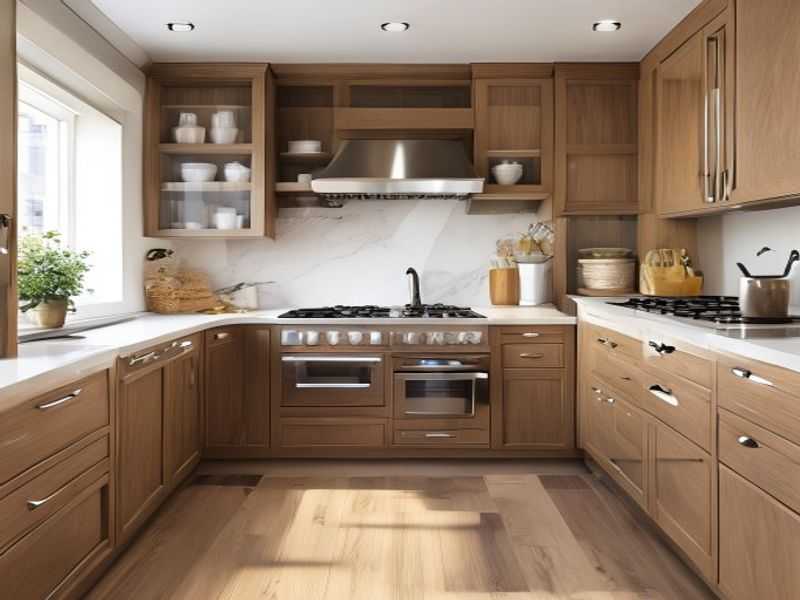
Finding the perfect cabinet depth can transform a cramped kitchen into a functional, stylish space. Homeowners often wonder whether a standard depth fits their small footprint or if custom options are necessary. This guide explains the standard measurements, evaluates their impact on layout, and offers practical recommendations to help you choose the ideal depth for your small kitchen. By the end, you’ll know exactly which depth maximizes storage, comfort, and visual balance.
Quick Review
The most versatile depth for small kitchens is 21 inches; it provides ample storage while preserving traffic flow. Deeper cabinets (24 in) work well when space allows, but shallower options (18–21 in) are ideal for tight layouts.
What is Standard Kitchen Cabinet Depth?
Standard kitchen cabinet depth refers to the measurement from the back wall to the front edge of the cabinet box, excluding the toe kick. Most base cabinets are built to a depth of 24 inches, a legacy dimension from traditional kitchen designs. This depth balances storage capacity with the ability to accommodate appliances and maintain a comfortable reach. Understanding the standard helps you evaluate whether it suits a small kitchen or if a modification is needed.
- Base cabinets: 24 in (standard), 21 in (common for tight spaces), 18 in (shallow).
- Wall cabinets: typically 12 in to 15 in deep.
- Depth is measured without the toe kick; add 3‑4 in for the kick itself.
Typical Depth Options for Small Kitchens
When space is limited, selecting the right depth is crucial. Below are the most common depths used in compact kitchens and their typical applications.
| Depth (inches) | Best Use | Pros | Cons |
|---|---|---|---|
| 24 | Standard base cabinets | Maximum storage, fits most appliances | Reduces floor space, may impede traffic |
| 21 | Tight layouts, galley kitchens | Good storage, better flow | Slightly less interior volume |
| 18 | Very small kitchens, islands | Maximizes floor area | Limited drawer depth, may feel shallow |
| 12‑15 | Wall cabinets only | Frees up wall space | Not suitable for base storage |
How Cabinet Depth Affects Small Kitchen Layout
The depth of your cabinets directly influences traffic patterns, visual proportion, and functional efficiency. In a small kitchen, every inch counts, so choosing the right depth helps maintain a smooth workflow and prevents the room from feeling cramped.
- Deeper cabinets (24 in) push the countertop forward, reducing the usable floor area.
- Shallower cabinets (18‑21 in) keep the work triangle compact, improving movement.
- Consistent depth across all base cabinets creates a uniform look, making the space appear larger.
Measuring for the Right Cabinet Depth
Accurate measurement ensures a proper fit and avoids costly rework. Follow these steps before ordering or installing cabinets.
- Clear the area where cabinets will sit; remove any existing trim.
- Measure from the back wall to the desired front edge, accounting for the toe kick.
- Check for obstacles such as pipes, electrical outlets, or appliances that may limit depth.
- Record the smallest clear opening; this becomes your maximum depth.
Base vs Wall Cabinet Depth – Key Differences
Base cabinets sit on the floor and support countertops, while wall cabinets hang above. Their depths serve different purposes and have distinct standard ranges.
| Cabinet Type | Standard Depth | Typical Height | Common Applications |
|---|---|---|---|
| Base | 24 in (standard) | 34‑36 in | Countertop support, storage for dishes, food |
| Wall | 12‑15 in | 12‑24 in | Dishware, spices, decorative items |
Recommended Depth for Small Kitchens (21″ vs 24″)
For most small kitchens, a depth of 21 inches strikes the best balance between storage and space efficiency. It allows enough room for a standard sink and dishwasher while keeping the aisle clear. If your kitchen can accommodate a 24‑inch depth without feeling squeezed, it offers the most storage capacity.
- 21 in depth: ideal for galley and L‑shaped layouts.
- 24 in depth: best when you have at least 42 in of clearance in front of the cabinets.
- Consider a mixed approach: 21 in for the main run, 24 in for a pantry or island.
Pros and Cons of Deeper Cabinets (24″)
| Pros | Cons |
|---|---|
| Maximum interior volume for pots, pans, and bulk items. | Reduces floor space, can impede movement. |
| Easier to accommodate built‑in appliances like microwaves. | May clash with wall cabinets, creating visual imbalance. |
| Supports larger countertop overhang for a sleek look. | Higher cost due to more material and hardware. |
Pros and Cons of Shallower Cabinets (18‑21″)
| Pros | Cons |
|---|---|
| Preserves floor space, improves traffic flow. | Less interior depth for deep storage. |
| Works well with standard countertop heights (36 in). | May require deeper drawers to compensate for shallow boxes. |
| Often lower material cost, easier to install. | Limited ability to store tall items like mixers. |
Best Depths for Specific Small Kitchen Layouts
Different layouts benefit from specific depth choices. Below are tailored recommendations.
- Galley kitchens: 21 in base cabinets to keep the walkway at least 36 in.
- L‑shaped kitchens: use 21 in on the short side and 24 in on the long side if space permits.
- U‑shaped kitchens: maintain uniform 21 in depth on all sides to avoid visual clutter.
- Open‑concept small kitchens: consider 18 in for a seamless transition to living areas.
Cabinet Depth and Appliance Integration
Appliance dimensions dictate minimum cabinet depth. A standard dishwasher is 24 in wide and requires a 24 in deep cabinet opening. Refrigerators typically need a 30‑in deep space, which may necessitate a custom depth or a shallow cabinet with a pull‑out panel.
- Measure appliance depth before selecting cabinet depth.
- Leave ½‑inch clearance behind appliances for ventilation.
- Use shallow base cabinets (18‑21 in) for built‑in ovens to maintain countertop height.
Depth for Islands and Peninsulas
Islands add valuable workspace but can compromise cabinet depth if not planned carefully. The depth of the island’s base cabinets should match the surrounding cabinetry to maintain visual continuity.
- Standard island depth: 24 in for a full‑size island, 21 in for a narrow peninsula.
- If the island includes a cooktop, ensure a minimum 30‑in depth for safety clearances.
- Consider a “half‑depth” island (12‑15 in) to keep traffic flow open.
Depth for Pantry and Tall Cabinets
Tall cabinets often have the same depth as base cabinets, but depth choices affect usability. A 24‑in deep pantry can store large boxes, while a 21‑in depth may be sufficient for most dry goods.
- Deeper pantry (24 in): ideal for bulk items, can accommodate pull‑out shelves.
- Shallower pantry (18‑21 in): works well in compact kitchens, reduces visual bulk.
- Combine shallow base depth with deeper wall cabinets for a balanced look.
Depth for Corner Cabinets and Lazy Susans
Corner cabinets present unique depth challenges. Standard 24‑in depth can make corner access difficult, whereas shallower depths improve reachability.
- Use 18‑21 in depth for corner base cabinets with pull‑out mechanisms.
- Lazy Susan units work best when the cabinet depth is 24 in, allowing a full 360° rotation.
- If space is tight, opt for a “corner base” that is 18 in deep with a specialized hinge.
Cabinet Depth and Ergonomics
Comfortable reach reduces strain during cooking. Depth influences how far you need to reach into a cabinet.
- Standard 24‑in depth requires a comfortable arm extension of about 24 in.
- Shallower 18‑21 in cabinets bring items within easier reach, ideal for seniors or petite users.
- Consider pull‑out shelves or slide‑out trays to enhance accessibility regardless of depth.
Cabinet Depth and Storage Efficiency
Depth directly impacts how much you can store and how organized the space feels.
- Deeper cabinets allow taller items (e.g., stockpots) to be stored without bending.
- Shallower cabinets encourage the use of organizers, bins, and dividers to maximize vertical space.
- Mix depths: deeper for bulk storage, shallower for frequently used items.
Cabinet Depth and Aesthetics
Visual balance is essential in small kitchens. Uniform depth creates a clean line, while varying depths can add character but may appear chaotic.
- Maintain consistent depth on the same cabinet level (all base cabinets 21 in).
- Use a slight depth variation (e.g., 24 in island, 21 in perimeter) to create a focal point.
- Consider the cabinet style: modern flat‑panel designs look best with sleek, uniform depths.
Cabinet Depth and Budget Considerations
Material costs rise with depth because more lumber or engineered panels are required. Shallower cabinets can reduce material expenses, but the savings may be offset by the need for additional storage solutions.
- Standard 24‑in cabinets: higher material cost, longer lead times.
- 21‑in cabinets: moderate cost, widely available.
- 18‑in cabinets: lowest material cost, may require more hardware (e.g., deeper drawers).
Cabinet Depth and Installation Tips
Proper installation ensures the depth you select works in the real world.
- Verify wall stud spacing; deeper cabinets may need additional support.
- Allow ½‑inch clearance behind cabinets for shims and leveling.
- Check toe‑kick height (typically 3‑4 in) to ensure the overall cabinet height remains comfortable.
- Use a level and a straightedge to confirm depth consistency across all units.
Cabinet Depth and Future‑Proofing
Designing with flexibility in mind can prevent costly remodels later.
- Choose a depth that accommodates future appliances (e.g., larger dishwashers).
- Consider modular cabinet systems that allow depth adjustments.
- Leave extra wall space for potential re‑configuration or added pantry sections.
Cabinet Depth and Accessibility (ADA)
Accessibility standards influence depth choices, especially for kitchens used by individuals with mobility challenges.
- ADA‑compliant base cabinets should have a maximum depth of 21 in to reduce reach distance.
- Install pull‑out shelves to bring contents within a 9‑inch reach.
- Ensure countertop height is 34‑36 in for wheelchair users.
Cabinet Depth and Design Trends
Current design trends favor a mix of depths to create visual interest while maintaining functionality.
- Two‑tone cabinets: deeper lower cabinets (24 in) with shallower upper cabinets (12‑15 in).
- Open‑shelf styling: reduces need for deep storage, favoring 18‑21 in depths.
- Integrated appliance panels: require precise depth to hide appliances seamlessly.
Cabinet Depth and Material Choices
The material affects how depth is achieved and the durability of the cabinet.
- Solid wood: can be built to any depth but may be heavier; best for 24‑in standards.
- Engineered wood (MDF, particleboard): common for 21‑in and 18‑in depths, cost‑effective.
- Metal or laminate cabinets: often standardized at 21‑in depth for commercial kitchens.
Cabinet Depth and Lighting
Depth influences the placement of under‑cabinet lighting and its effectiveness.
- Deeper cabinets (24 in) may cast shadows on countertops; add extra LED strips.
- Shallower cabinets allow lights to sit closer to the work surface, improving illumination.
- Consider motion‑sensor lights for shallow cabinets to activate when the door opens.
Cabinet Depth and Ventilation
Proper ventilation around appliances depends on cabinet depth and placement.
- Range hoods typically require a minimum 30‑in clearance; ensure base cabinets do not obstruct airflow.
- Deeper cabinets can impede heat dissipation; leave a ½‑inch gap at the back.
- Use vented cabinet doors or grilles for deep base cabinets housing ovens.
Comparison Table: Standard vs Custom Cabinet Depths
| Depth | Typical Cost | Storage Capacity | Best For |
|---|---|---|---|
| 24 in (standard) | High | Maximum | Large kitchens, bulk storage |
| 21 in (common) | Medium | Good | Small to medium kitchens |
| 18 in (shallow) | Low | Limited | Tight spaces, islands, accessibility |
| Custom (e.g., 30 in) | Very high | Very high | Specialty appliances, pantry rooms |
FAQs
- What is the most common cabinet depth for small kitchens?
The 21‑inch depth is most frequently recommended because it balances storage and traffic flow. - Can I use 24‑inch cabinets in a 10‑foot kitchen?
Yes, if you maintain at least 36‑inch clearance in front of the cabinets to avoid crowding. - Do wall cabinets affect base cabinet depth choices?
Wall cabinets are shallower (12‑15 in) and generally do not dictate base cabinet depth, but visual harmony is important. - How does cabinet depth impact resale value?
Neutral depths (21‑24 in) are preferred by buyers; overly shallow cabinets may be seen as lacking storage. - Are there depth standards for pantry cabinets?
Pantry depth typically matches base cabinet depth (21‑24 in) to accommodate tall shelving. - What depth is ideal for a kitchen island?
24 in for a full island, 21 in for a narrow peninsula, or 18 in for a compact cart. - How much toe‑kick space should I leave?
A standard toe‑kick is 3‑4 in; add this to the cabinet depth when measuring total footprint. - Can I mix different depths in the same run?
Yes, but keep transitions smooth to maintain visual continuity and avoid tripping hazards. - Do deeper cabinets require stronger hinges?
Heavier doors may need reinforced hinges or soft‑close mechanisms to prevent sagging. - Is 18‑inch depth sufficient for a dishwasher?
Most dishwashers need a 24‑inch opening; a shallow cabinet may require a custom panel or a different appliance.
Conclusion
Choosing the right cabinet depth is a pivotal decision for any small kitchen remodel. While 24‑inch base cabinets offer the most storage, 21‑inch depth provides the optimal blend of functionality and space efficiency for most compact layouts. Evaluate your kitchen’s dimensions, traffic flow, appliance needs, and budget before selecting a depth. Use the tables and checklists in this guide to measure, compare, and decide with confidence. With the proper depth, your small kitchen can feel spacious, organized, and stylish.